
Celebrating of 150 Years of American Chemical Society
Frick Chemistry Laboratory Taylor Auditorium
Thursday, November 19, 2026, 6:30 – 8:15 PM
Fill out this form to register
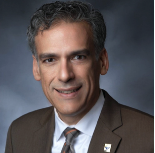
Special Guest: Rigoberto Hernandez, Professor, Johns Hopkins University
Princeton University alum and American Chemical Society President
Speaking on 150-year anniversary and the Importance of Membership
PACS 100-year anniversary 2027; Recent past PACS Chairs and PACS 50-, 60-year ACS members
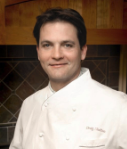
Special Guest Speaker: Craig C. Shelton, Author, James Beard Chef, Shelton Hospitality Group
Presentation: “The Enlightened Restaurant and the Birth of Mitochondrial Health Cuisine”
The Birth of Mitochondrial Integrity Cuisine
Craig C. Shelton
When I was a student at Yale from 1970s and early 1980s, studying molecular biophysics and biochemistry (MB&B), I did not imagine that what I learned there would someday become the foundation of a cuisine. But it did. Those years gave me access to a body of research that was only beginning to break through — studies that would later reshape how we think about food, health, and disease. One of them, “Lipid peroxidation in mitochondrial membrane” by Vladimirov et al in 1980, how oxidation of unsaturated fatty acids in mitochondrial phospholipids can lead to serious structural / functional deterioration of membranes. And even earlier, in 1973, Santiago and colleagues showed that when cardiolipin degrades, mitochondrial function collapses with it. Cardiolipin and ATPase — the enzyme that drives energy production — rise and fall together.
Another paper, “Effects of Peroxidized Polyunsaturated Fatty Acids on Mitochondrial Function and Structure: Pathogenetic Implications for Réve’s Syndrome” by R. E. Brown in 1988 examined how peroxidized PUFAs affect mitochondrial integrity and function. Another study, by McGee and Greenwood in 1989, demonstrated that dietary fat composition changes the phospholipids of brain mitochondria and synaptosomes. Imagine that: switch the oil, and you literally switch the chemistry of the brain’s membranes. Yet another paper by Dyer and Sinclair in 1991, showed that linoleic acid — the omega-6 fatty acid so abundant in our modern diet — directly remodels cardiolipin, the signature lipid of brain mitochondria. In other words, what we eat doesn’t just fuel the brain, it alters its architecture. Taken together, these studies told me something that most chefs were not even thinking about in 1991: diet is not just calories in, calories out. It is chemistry inscribed into the deepest machinery of our cells. When you change the fats in the diet, you change cardiolipin. When you change cardiolipin, you change the stability of the mitochondria. And when you destabilize mitochondria, you set in motion the cascade toward metabolic syndrome, cardiovascular disease, and neurodegeneration — the very diseases that now define aging in America.
So when I took the helm at The Ryland Inn in 1991, I made a decision that startled many in the industry. I abolished seed oils. Entirely. At a time when soybean oil and corn oil were being marketed as ‘heart healthy,’ we went another way. We fried only in grass-fed beef tallow. We used organic extra virgin olive oil, cold-pressed avocado oil, organic coconut oil — and only grass-fed or wild animal fats. We aligned our cuisine not with the marketing of the day, but with the architecture of the cell. I came to call this approach a ‘Mitochondrial Integrity Cuisine.’ Because that, in essence, was what it was: a cuisine built to protect the mitochondria, to preserve the structural lipids that allow our cells to live, to resist the corrosion imposed by a grain-based, omega-6–heavy diet. It was not trend, and it was not nostalgia. It was biophysics brought to the kitchen. And in retrospect, it was one of the first conscious attempts to say: cuisine must not only delight the palate, it must safeguard the cellular structures that give us life. That was 35 years ago.
Today, we can measure what then I could only infer: mitochondrial decay, neural apoptosis, the rise of Alzheimer’s and Parkinson’s, the explosion of metabolic syndrome — all of them linked to the very instability of cardiolipin that those early studies revealed. The science has caught up. But the principle remains the same: the fats we choose, the oils we cook with, are not incidental. They are the architecture of health or the architecture of decay.